Stahlbus: thoughtful design for regular maintenance
The Stahlbus bleeder valve replaces the existing bleed screw. The key difference lies in its two-part construction: the lower section remains firmly screwed in place. Only the upper section is opened for bleeding. An integrated O-ring seals this connection, preventing air from being drawn in or brake fluid from escaping through the open thread.
The one-way valve controls the flow of fluid during pumping. This eliminates the need to repeatedly open and close the valve between individual lever strokes. The lower section and its threaded connection remain undisturbed during subsequent bleeding operations.
How the Stahlbus bleeder valve works
The cutaway illustration shows the valve's construction. The upper section, O-ring and spring-loaded ball perform different functions: the O-ring seals the movable connection, while the ball and spring provide the one-way valve function.
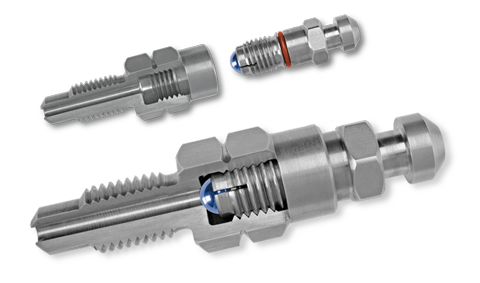
The components of the Stahlbus bleeder valve shown in cross-section.
When you operate the brake lever or pedal, fluid pressure opens the one-way valve. Brake fluid and any air carried with it can escape through the connected bleed hose. When you release the lever or pedal, the one-way valve closes automatically. This prevents fluid and air from being drawn back through the bleed outlet.
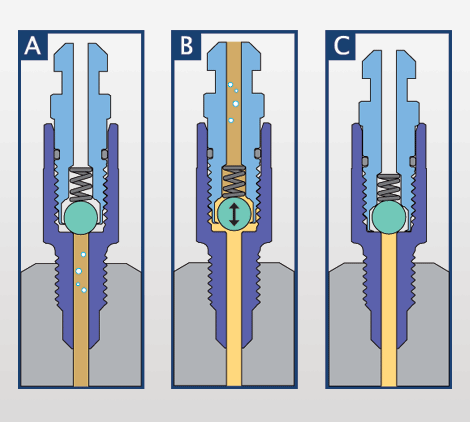
The animation illustrates how the one-way valve opens and closes.
The bleeding process at a glance
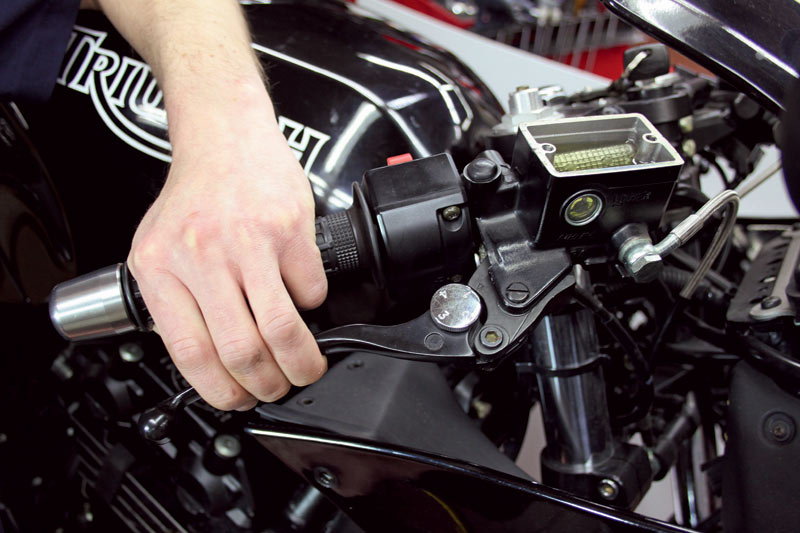
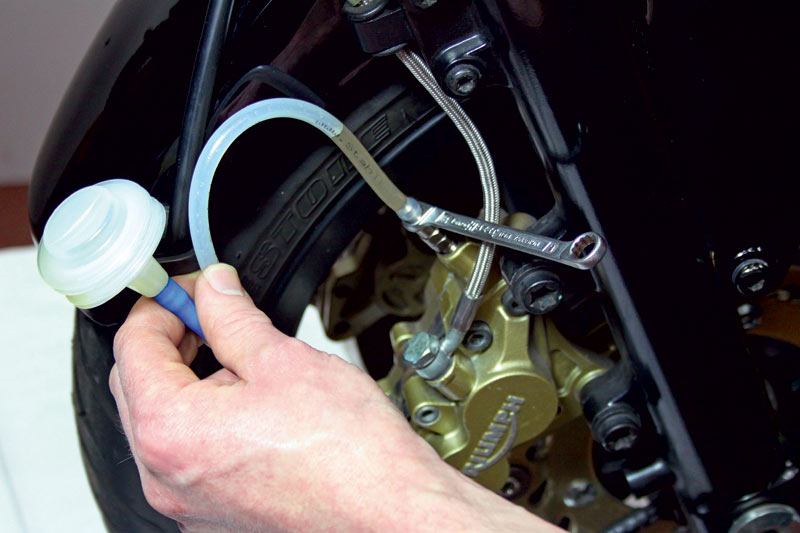
The following animation shows how brake operation and the bleeder valve work together on a motorcycle brake system.
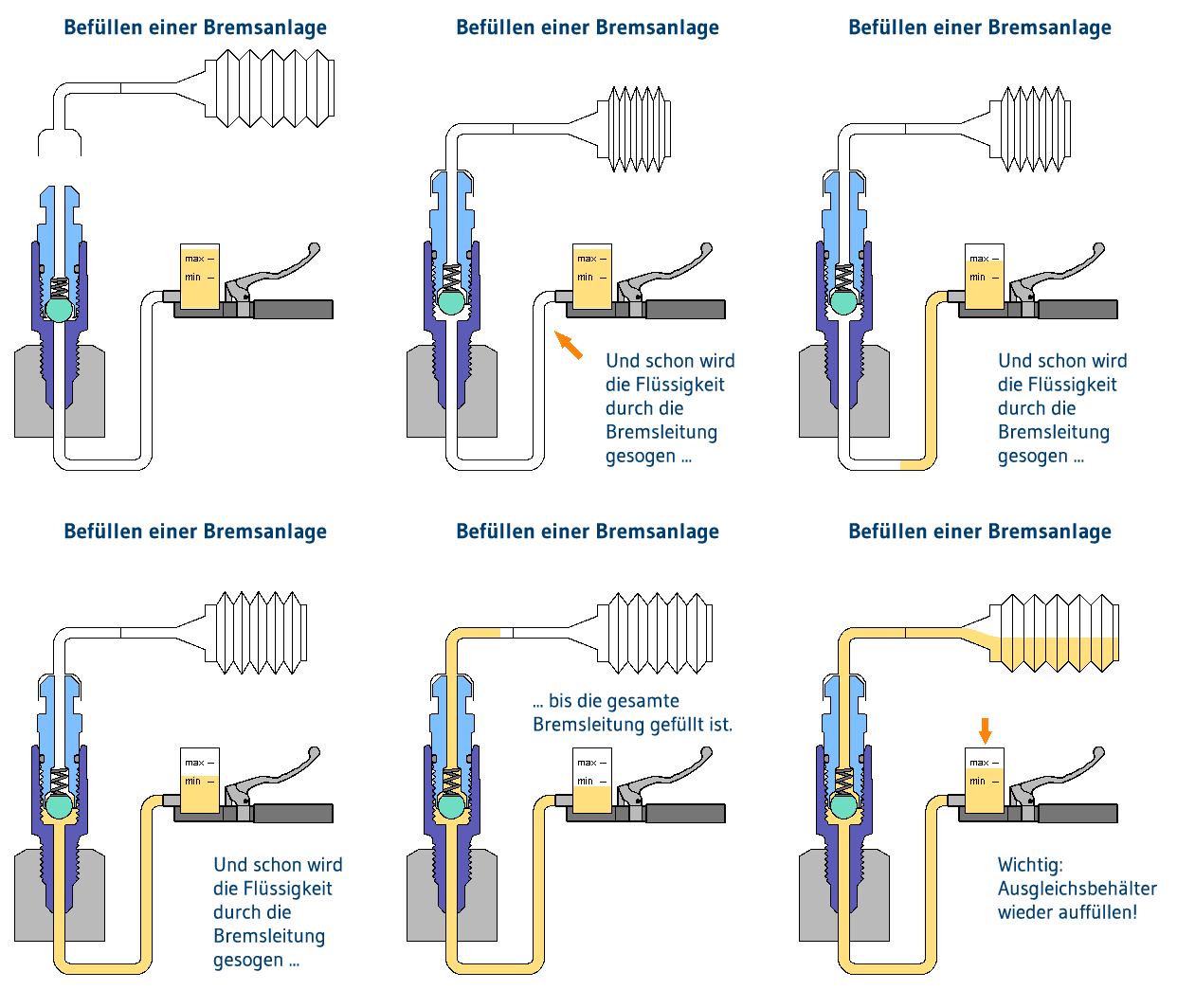
Pump brake fluid through and remove air from the system – without repeatedly opening and closing the valve.
1. Fit the correct valve
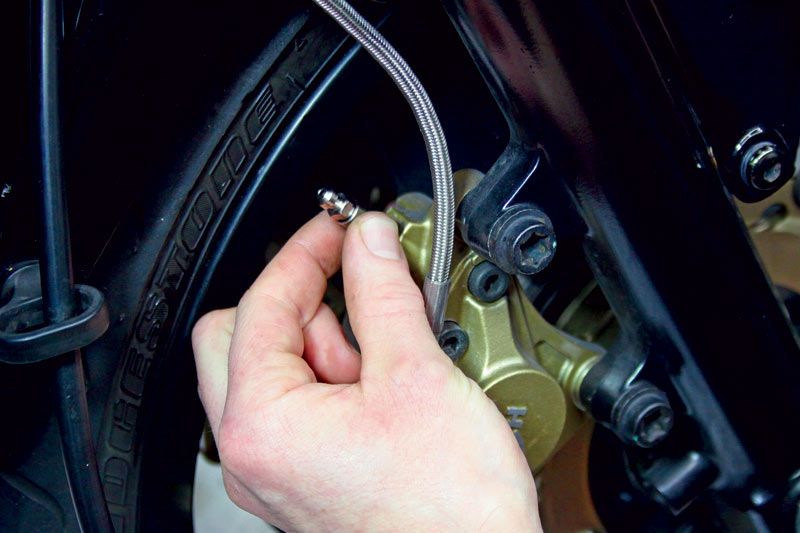
The appropriate Stahlbus bleeder valve is fitted in place of the existing bleed screw. The thread, sealing seat and installation dimensions must match the connection. Follow the respective manufacturers' fitting instructions and specified tightening torques.
2. Prepare for bleeding
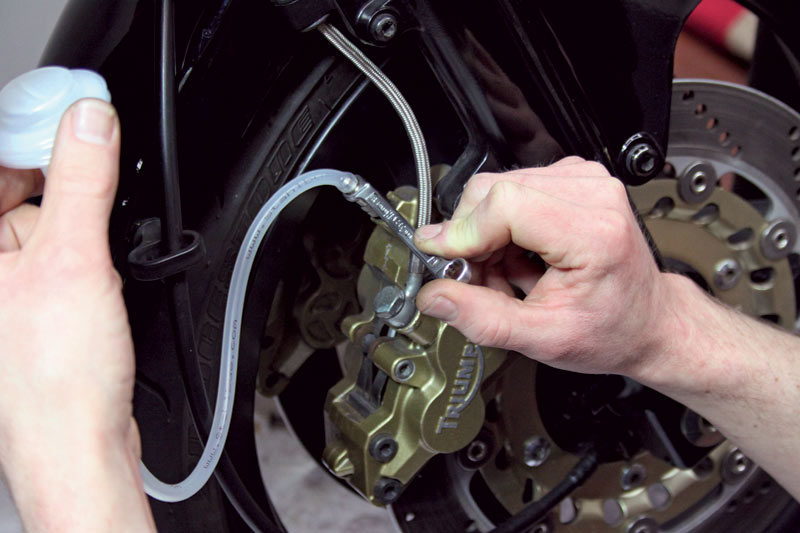
Attach the bleed hose and open the upper section according to the Stahlbus instructions. The lower section remains firmly screwed in place.
3. Pump the brake fluid through
Repeatedly operating the brake lever or pedal pumps brake fluid through the valve into the hose. The one-way valve opens and closes automatically. Monitor the fluid level in the reservoir throughout the process and top it up as required to prevent fresh air from entering the system.
4. Close the valve and fit the cap
Once bleeding is complete, close the upper section according to the manufacturer's instructions and fit the cap. Then check the fluid level, check for leaks and verify correct brake operation.
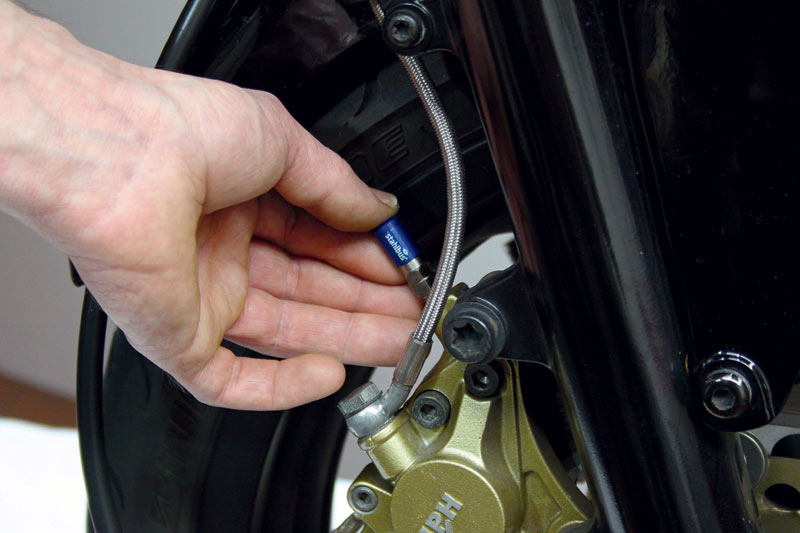
This overview explains the operating principle. For the actual procedure, follow the Stahlbus instructions and your motorcycle's maintenance requirements, particularly for ABS brake systems.
Stahlbus caps and rubber bleed screw caps
The Stahlbus caps made from anodised aluminium are available in various colours. They fit Stahlbus bleeder valves only.
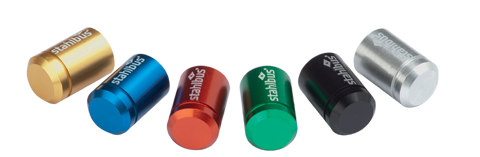
You will also find rubber bleed screw caps for conventional bleed screws here. Particularly on older motorcycles, the original caps are often split or missing. A suitable replacement cap protects the exposed bleed outlet from dirt. Choose the correct size for the bleed nipple.
SpeedBrakes Speedbleeders: a simple design with a one-way valve
SpeedBrakes Speedbleeders combine the design of a bleed screw with an integrated one-way valve. A thread seal prevents air from entering the system through the loosened thread during bleeding.
Once the screw is opened, brake fluid can be moved through by repeated pumping. The one-way valve prevents reverse flow through the bleed outlet. This design also eliminates the need to repeatedly open and close the screw between pumping strokes. Once the work is complete, the bleed screw is closed again.
Brake components for maintenance and overhaul from Klaus Goerz
I have been working with motorcycle parts, accessories and tuning for over 27 years. A proper brake system overhaul involves more than bleeding: the condition of the hoses, seals and moving components also matters.
Alongside our bleeding systems, you will therefore find braided stainless steel brake lines, brake master cylinder and brake caliper rebuild kits, as well as brake pads and brake discs. This allows you to plan the maintenance work and the parts you need together.

 Rubber cap for brake bleed nipple
 stahlbus brake bleeder valve M8x1.25x16mm (M),...
 stahlbus brake bleed valve M8x1.25x13.5mm (M),...
 Speedbrakes brake bleed valve M8x1.25 x 28mm